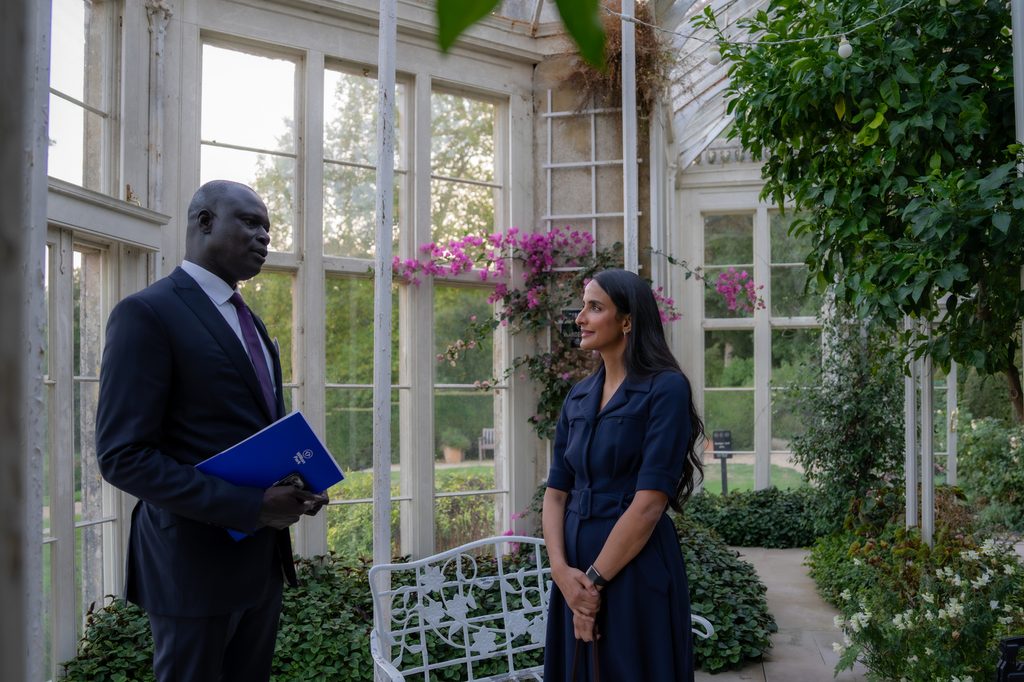
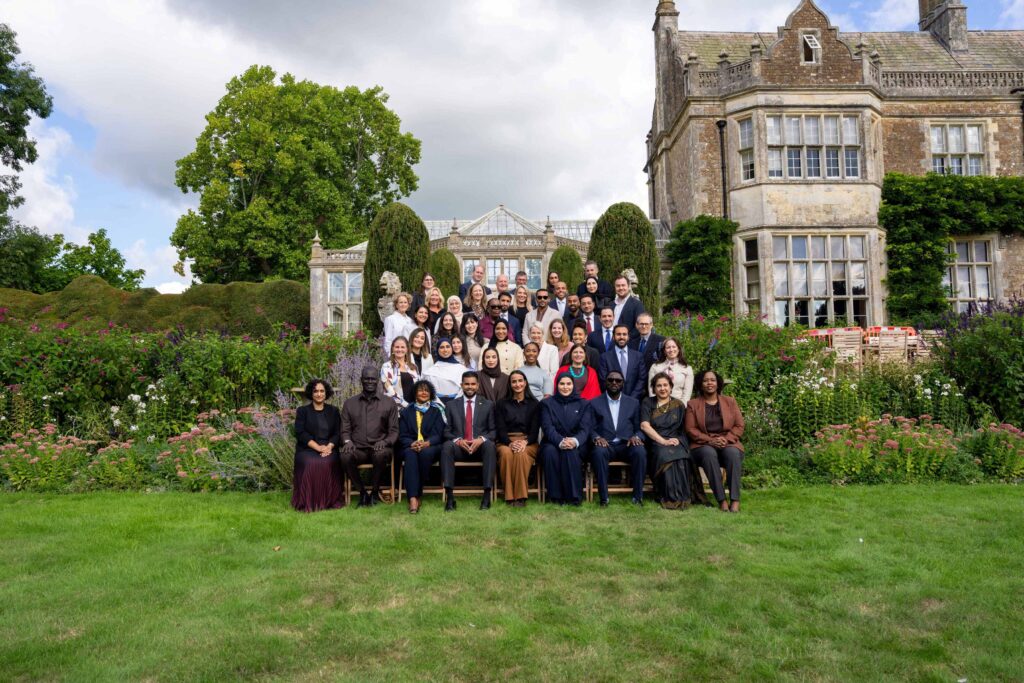
International leaders spanning sport, government, policy, development and civil society have been called upon to join a global coalition focused on turning sport’s potential as a driver of social development into practical action, at an event hosted by Qatar Foundation and Wilton Park in West Sussex, UK, mid-September 2026.
Held under the theme “Sport for Development in the Global South: Advancing Female Empowerment, Inclusion, and Accessibility,” the three-day dialogue examined why existing sporting systems continue to exclude women and girls, and what must change across policy, research, finance, infrastructure, coaching and athletic pathways.
Bringing together policymakers, development practitioners, rights advocates, NGOs and sport administrators, participants explored how the Global South can play a greater role in shaping international priorities and ensuring solutions reflect the realities of the communities they are intended to serve.
Wilton Park, an Executive Agency of the UK Foreign, Commonwealth and Development Office (FCDO), and Qatar Foundation (QF) will now jointly develop a roadmap outlining actions, partnerships and approaches to breaking down barriers that prevent women and girls, people with disabilities, and displaced communities from accessing and benefiting from sport.
“Parity assumes identical needs, which is simply not the case”
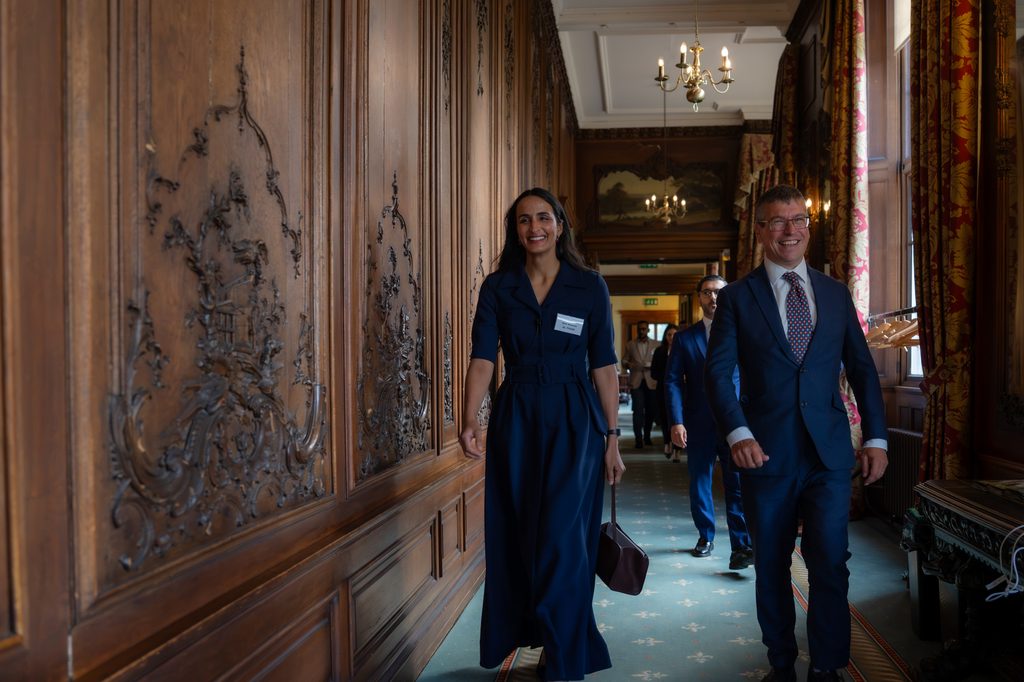
Speaking at the dialogue, Her Excellency Sheikha Hind bint Hamad Al Thani, Vice Chairperson of Qatar Foundation and a leading global advocate for women’s and girls’ sport, invited those attending to join a global sport-for-development coalition that “carries commitments forward and turns them into action”, building on a landmark 2025 United Nations resolution enshrining sport as a human right and a means of empowering women and girls globally.
Initiated and submitted by Qatar on behalf of a core group of countries including Indonesia and Morocco, Resolution 59/17 has since been co-sponsored by 71 countries, and Her Excellency Sheikha Hind told the global audience at Wilton Park that its ambition “goes beyond parity.”
“Parity assumes identical needs, which is simply not the case,” she said. “The barriers girls face are fundamentally different. They deal with safety risks, stigma, and a research landscape that has largely ignored the needs of women and girls.”
Around the world, she said, a repeating pattern of high injury rates among female athletes, and high dropout rates from sport among adolescent girls, is being seen “largely because sporting pathways are rarely designed with women and girls in mind.”
“Our approach is to close that gap in practice, not just in principle,” Her Excellency Sheikha Hind said. “Involving women in the design of facilities, providing coaching tailored to women’s needs, and building the scientific research base that, too often, doesn’t exist for women’s and girls’ sport.”
Describing sport as “one of the most underused tools we have for development,” Her Excellency Sheikha Hind said: “It builds confidence, mobility, leadership, and opportunity, especially for women and girls in impoverished communities. But access remains deeply uneven, and the barriers are structural, cultural, and often invisible until you look closely.”
She emphasized that the goal is to build: “A sustained agenda to advance shared goals through sports with a coalition of partners assembled deliberately.”
And Her Excellency Sheikha Hind told delegates: “I invite each of you to join us in shaping this new sports coalition – one that carries these commitments forward and turns them into action. Qatar Foundation stands ready to help lead this effort.”
Who was in the room
Among the sporting organizations represented at the Wilton Park dialogue were Olympism365, the International Paralympic Committee, the Special Olympics, the British Olympic Association, and the New Zealand Olympic Committee. They were joined by representatives from organizations including the Centre for Sport and Human Rights, Laureus Sport for Good Foundation, Right to Play, the Street Child World Cup, the Yunus Centre, NBA Africa, London Marathon Foundation, and FIVB (Fédération Internationale de Volleyball), as well as from QF’s Hamad bin Khalifa University, the University of Oxford, and New York University. Leading athletes including sprint legend Shelly-Ann Fraser-Pryce, and Olympic fencing medalist Ibtihaj Muhammad also attended, alongside The Honorable Charles S. Ramson, Guyana’s Minister of Culture, Youth and Sports.
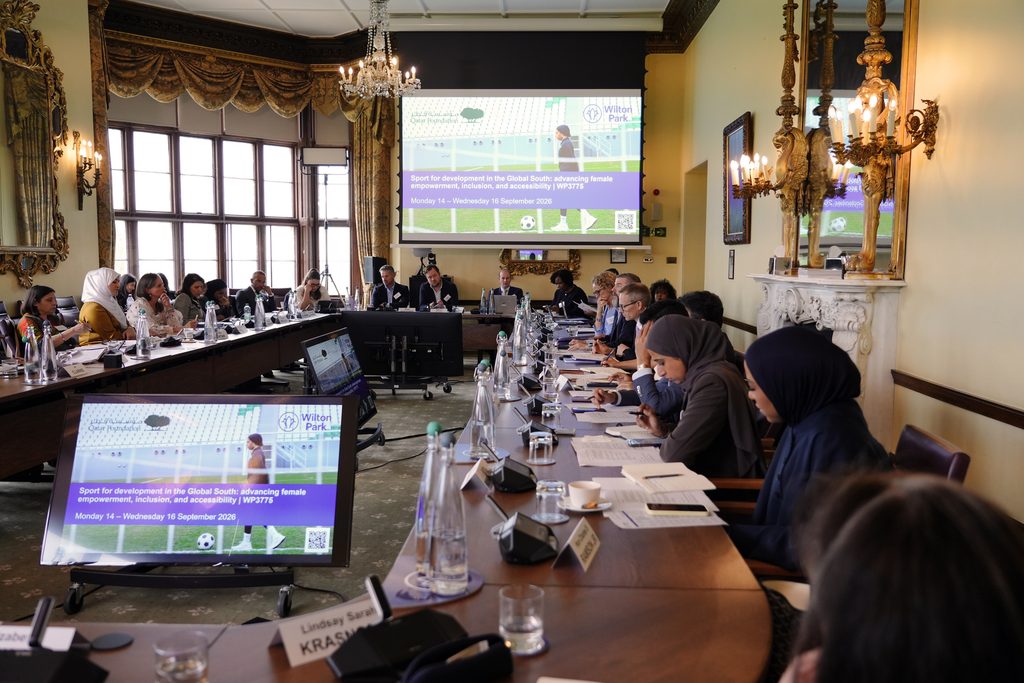
Across a series of sessions, they addressed topics including how women’s and girls’ sport contributes to development goals; removing systemic barriers to empowering women and girls through sport; the role of international donors and investors in promoting sport-for-development; the expansion of access to sport for women and girls with disabilities; diplomatic tools that can give female athletes and sporting nations in the Global South more influence; and how traditional sports can support the preservation of cultural heritage and identity.
“A girl on a sports field is a quiet but powerful challenge”
In his opening address at the Qatar Foundation and Wilton Park convening, His Excellency Dr. Khalilur Rahman, President-Elect of the 81st Session of the United Nations General Assembly, said: “Across the Global South, I have seen sport do something that few other interventions can: it changes how a girl is seen by her family and community, and how she sees herself. A girl who plays on a team learns to take up space, to lead, to fail and try again in public, and that confidence follows her into the classroom, the workplace, and civic life.
“Sport has also opened doors that were otherwise closed. It has given women and girls a safe and structured space outside the home, and role models: women coaches, referees, and athletes, who prove that leadership is not reserved for men. In many communities, a girl on a sports field is a quiet but powerful challenge to old assumptions about what girls and women can do.
“The 81st Session of the General Assembly will place the 2030 agenda, human rights, and inclusive multilateralism at the center of our work. I see gatherings like this one – practical, community-rooted, and genuinely inclusive – as exactly the kind of partnership the United Nations needs to deliver for all.”
Her Excellency Amina Mohamed, Kenya’s former Cabinet Secretary for Sports, Culture and Heritage, was among those participating in the dialogue, and said: “Women and girls, particularly in the Global South, cannot simply be invited into systems that were not designed with them in mind; we must transform those systems so they can lead, thrive and shape our shared global priorities.
“Increasing the number of women on the field is not enough. We need representation, targets and accountability to ensure meaningful, participation of women and girls of all abilities in sport and beyond. Convenings like this, brought together by Qatar Foundation and Wilton Park, are vital because they turn dialogue into partnerships and partnerships into action.”
And His Excellency Dr. Mamadou Tangara, Head of the African Union Mission in Mali and the Sahel (MISAHEL), said: “The importance of sport as a means for development cannot be understated. Sport can unite communities, provide opportunities for our youth and brings educational, social and cultural benefits, making it a unique tool, particularly in areas that are afflicted by conflict.
“Sport can be, and is, a viable tool that can build resilient societies and peaceful societies. I look forward to working together to elevate this important agenda working with the Qatar Foundation and the other important partners here today.”
Qatar’s track record
As a rising global sporting hub, Qatar is building on the legacy of its hosting of the 2006 Asian Games – a tournament it will again host in 2030 – and the FIFA World Cup 2022™ by investing in pathways and opportunities for all athletes to thrive, expanding sporting opportunities for women and girls, and ensuring sport is utilized for tangible social impact, within and beyond its own borders.
According to QF, the organization’s longstanding commitment to inclusive, accessible sport – in Qatar and on a regional and international level – has seen more than 70,000 women and girls participate in sporting events at its Education City Stadium over the past two years. Over 1,000 girls have so far participated in its Creating Pathways program, which nurtures young female sporting talent in track and field, volleyball, fencing, basketball, and tennis.
Circle In – an initiative led by QF, Education Above All Foundation, and the International Olympic Committee – is supporting sport-for-good projects in 10 countries, with a focus on women and girls, people with disabilities, and people from marginalized backgrounds, and the initial aim of benefiting up to 50,000 children and young people while training up to 5,000 coaches, teachers, and instructors. Meanwhile, QF and the Basketball Africa League have formed a partnership – facilitated by Qatar Sports Investments – to create opportunities for more people in Africa to play and benefit from basketball.
“Every girl should have the opportunity to participate in sport in an environment where she feels safe, supported and able to thrive,” said Victoria Nussbaumer, Executive Director, FIVB Volleyball Foundation. “But our responsibility goes beyond the court: it is about creating pathways for women across the entire sporting ecosystem – from leadership to coaching, media and sports photography – and ensuring that today’s opportunities become tomorrow’s legacy.
“Convenings like this, led by Qatar Foundation and Wilton Park, are important because they bring together the people who can turn that ambition into lasting change for the next generation. The time is now to make that change.”